
South Africa’s domestic new vehicle sales surged 7.5% in January 2026 to 50,073 units, up from 46,594 a year earlier.
The Automotive Business Council reports that new vehicle market entered 2026 with sustained momentum, confirming that the positive trajectory established during 2025 has carried decisively into the New Year.
Export sales increased to 24,568 units, representing a gain of 136 units, or 0, 6%, compared to the 24,432 vehicles exported in January 2025.
naamsa notes that the January 2026 performance reflects not merely a carry-over or base effect, but a material improvement in underlying demand conditions, supported by moderating inflation, stable macroeconomic variables, and a resilient consumer base.
Overall, out of the total reported industry sales of 50,073 vehicles, an estimated 42,753 units, or 85,4%, represented dealer sales, an estimated 10,9% represented sales to the vehicle rental industry, 2,1% to industry corporate fleets, and 1,6% to government sales.
The January 2026 new passenger car market at 37,190 units recorded an increase of 2,480 units, or 7,1%, compared to the 34,710 new cars sold in January 2025. Car rental sales accounted for 13,3%, of new passenger vehicles sold during the month. Domestic sales of new light commercial vehicles (bakkies and mini-buses) at 10,996 units during January 2026 recorded an 11,0% increase compared to the 9,903 units sold in January 2025.
naamsa noted light commercial vehicles demand continues to track broader conditions in the goods-producing sectors of the economy, which remain constrained but show signs of gradual stabilisation.
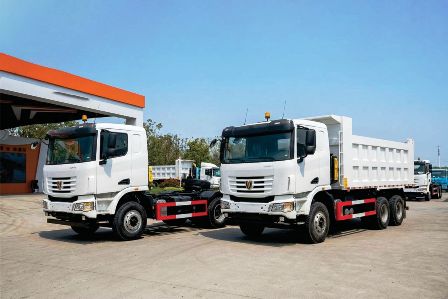
Sales in the medium and heavy commercial vehicle segments reflected a weak performance in January 2026. Medium commercial vehicle sales at 542 units represented a 5,9% year-on-year decrease in 2026, while heavy trucks and buses at 1,345 units reflected a 4,3% decrease compared to January 2025. Fleet replacement decisions remain closely linked to infrastructure investment trends, logistics performance, electricity costs, and confidence in the broader investment outlook.
January 2026 vehicle export sales at 24,568 units reflected a year-on-year increase of 136 units, or 0,6%, compared to the 24,432 vehicles exported in the corresponding month last year. The export performance was supported by currency stability and easing imported input cost pressures; however, naamsa cautioned that the export outlook is increasingly shaped by heightened protectionism across several of South Africa’s key export markets.
The leading representative organization for the automotive industry in South Africa also reflects that the proliferation of trade-restrictive measures and evolving industrial policies in advanced economies continue to test South Africa’s automotive export competitiveness and market access conditions. Furthermore, deepening trade and industrial arrangements between Western and Eastern economies – including preferential trade agreements, regional content rules, and strategic supply chain realignments- are expected to pose upward risks to South Africa’s vehicle export competitiveness and market share in certain traditional export destinations.
These developments underscore the growing importance of cost competitiveness, and policy certainty in sustaining South Africa’s export performance over the medium to long term.
From a macro-economic perspective, naamsa highlights that the new vehicle market continues to benefit from a materially improved inflation and monetary policy environment. Headline consumer price inflation remains well anchored within the South African Reserve Bank’s [SARB] target range, with long-term inflation expectations at multi-year lows.
The SARB has reiterated its objective of achieving a permanent inflation settlement at 3% by 2026, providing a critical anchor for pricing, investment, and long-term financing decisions. Although the Monetary Policy Committee [MPC] maintained the repo rate at 6.75% at its January 2026 meeting, the split decision signalled growing confidence that the easing cycle has been delayed rather than derailed.
Market expectations of a 25-basis point interest rate cut as early as March 2026, with a potential terminal rate of approximately 6.25% by year-end, continue to support improved affordability and buyer sentiment in the new vehicle market. In addition, the Rand’s appreciation to multiyear best levels against the US dollar has materially reduced imported inflation pressures, particularly for durable and semi-durable goods. This has contributed to moderating new vehicle price increases and has further supported real household purchasing power.
Looking ahead, naamsa emphasises that the industry waits with pressing anticipation the finalisation of the comprehensive review of South Africa’s automotive policy framework, which is crucial for the sector’s long-term competitiveness, investment attractiveness, and resilience.
In an increasingly complex and rapidly evolving global automotive environment – characterised by technological disruption, shifting trade alliances, and accelerated energy transition pathways – a coherent, forward-looking policy framework remains critical to secure South Africa’s position within global and regional automotive value chains.
The timely finalisation of this review and other policy measures are critical in securing the future of automotive manufacturing in South Africa in an increasingly competitive global investment environment.
Against this backdrop, naamsa believes that sustained macroeconomic stability, alongside a credible and forward-looking policy framework, will be pivotal in reinforcing the automotive sector’s competitiveness and long-term growth trajectory.